 EN

How to Choose the Right Bedding Fabric: A Complete Guide for Buyers
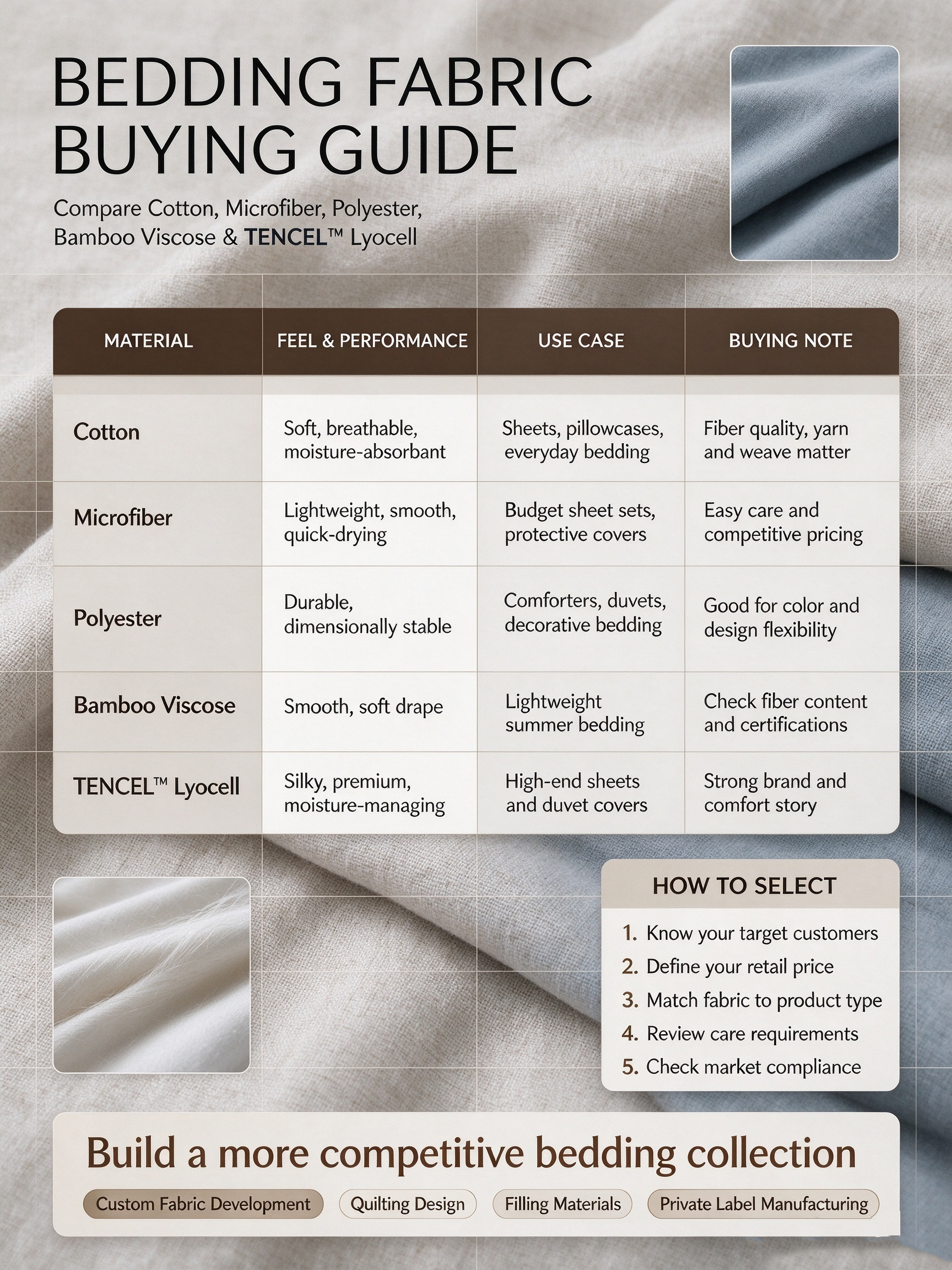
Choosing the right fabric is one of the most important decisions when developing a bedding collection. Fabric affects not only the appearance of bedding products but also their softness, breathability, durability, maintenance requirements, and overall cost.
For bedding brands, retailers, and wholesale buyers, understanding the characteristics of different materials can help make better purchasing decisions.
1. Cotton: A Classic Choice for Bedding
Cotton is one of the most widely used materials in the bedding industry.
Key characteristics:
* Soft and comfortable against the skin
* Good moisture absorption
* Breathable and suitable for everyday bedding
* Available in different constructions and finishes
Cotton bedding is popular among customers who value natural fibers and everyday comfort. Its performance depends on fiber quality, yarn, weave, and finishing.
2. Microfiber: Lightweight and Easy to Maintain
Microfiber is commonly made from very fine polyester fibers. It is widely used in affordable bedding collections.
Key characteristics:
* Lightweight and smooth
* Quick-drying
* Generally wrinkle-resistant
* Easy to maintain
* Suitable for cost-conscious product ranges
Microfiber is a practical option for wholesalers and retailers looking for versatile bedding products at competitive price points.
3. Polyester: Durable and Versatile
Polyester is a widely used synthetic fiber in home textiles.
Key characteristics:
* Good dimensional stability
* Durable for regular use
* Generally wrinkle-resistant
* Offers flexibility in colors and designs
* Can be blended with other fibers
Polyester fabrics are frequently used in comforters, duvet covers, pillowcases, and decorative bedding products.
4. Bamboo Viscose: Softness and Smooth Texture
Bamboo viscose is a regenerated cellulose fiber made from bamboo-derived pulp through a chemical processing process.
Key characteristics:
* Smooth and soft hand feel
* Good moisture absorption
* Comfortable drape
* Suitable for lightweight bedding applications
When selecting bamboo viscose products, buyers should pay attention to fiber composition, manufacturing processes, and relevant product certifications.
5. TENCEL™ Lyocell: A Premium Bedding Material
TENCEL™ Lyocell is a branded lyocell fiber known for its smooth surface and soft feel.
Key characteristics:
* Silky and smooth texture
* Good moisture management
* Soft drape
* Suitable for premium bedding collections
It is an interesting option for brands developing higher-end bedding products.
6. How to Select the Best Fabric for Your Market
There is no single fabric that is best for every bedding product.
Before making a purchasing decision, buyers should consider:
* Target Customers: What materials and comfort levels do your customers prefer?
* Price Range: Does the fabric fit your target retail price?
* Product Application: Is it intended for comforters, duvet covers, sheets, or pillowcases?
* Care Requirements: Does the fabric meet customers’ expectations for washing and maintenance?
* Market Regulations: Are the fiber composition labels and product certifications appropriate for your destination market?
Final Thoughts
The right fabric combines comfort, functionality, appearance, and commercial value.
Understanding the differences between cotton, microfiber, polyester, bamboo viscose, and TENCEL™ Lyocell helps buyers develop more competitive bedding collections.
As a home textile manufacturer, we support customized bedding development with different fabric options, quilting designs, filling materials, and product specifications.
Have a bedding project in mind? Contact us to explore suitable materials and customized manufacturing solutions.