 EN
EN

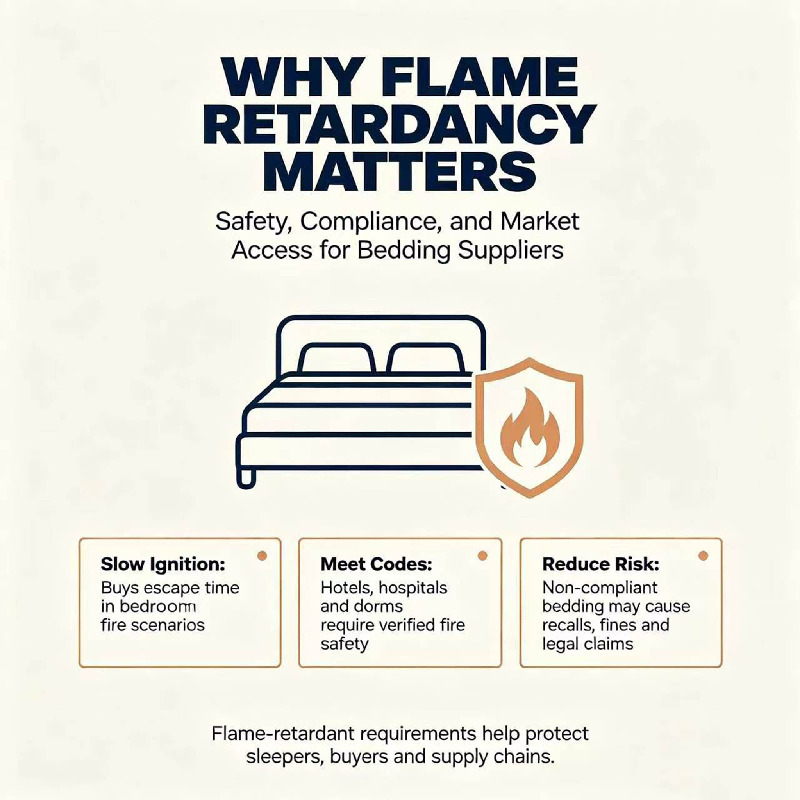
Flame‑retardant standards are not random add‑ons for bedding manufacturers, they stem from real‑world safety risks and strict market access rules. Bedding items like mattresses, pillow protectors and bed linens sit close to people while they sleep. Fires triggered by cigarettes, overheated electronics or candles can spread fast across soft textiles, and non‑treated bedding will catch fire and release heavy smoke very quickly. Flame‑retardant treatments slow down ignition and reduce flame spread, buying precious time for people to escape.
Large suppliers mostly serve commercial buyers: hotels, hospitals, dormitories and bulk e‑commerce sellers. These B‑end customers are bound by local building and fire codes. If bedding fails flame tests, the whole venue faces safety fines or insurance complications. Buyers will directly reject goods without valid flame‑retardant test reports, so suppliers have to meet these specs just to qualify for tender or wholesale orders.
Cross‑border trade adds another layer of pressure. Regions such as North America and Europe enforce clear bedding fire safety regulations. For example, mattress products sold to the US must comply with CPSC flammability requirements. Shipments that cannot pass related testing will be held at customs, returned or destroyed. That brings huge losses on inventory, logistics and lead time. To keep stable overseas business, large factories build flame‑retardant capability into their regular production workflow, rather than treating it as a special custom option.
Reputation and liability also drive this demand. Once a fire incident links back to non‑compliant bedding, suppliers may face costly product recalls and legal claims. Consistent flame‑retardant performance helps big suppliers lower operational risk and build trust with long‑term clients. Not all orders need flame‑retardant finishes, but keeping the technical capacity lets them cover both standard retail and high‑safety commercial projects.