EN
EN
The latest CPSC regulations, particularly the mandatory e-filing requirement taking effect July 8, 2026, represent a significant operational shift for the home textile industry. While the underlying safety standards remain largely unchanged, the new compliance process introduces substantial logistical and financial implications.
Below is a breakdown of the key impacts and what they mean for your business.
The Core Change: Mandatory CPSC e-Filing
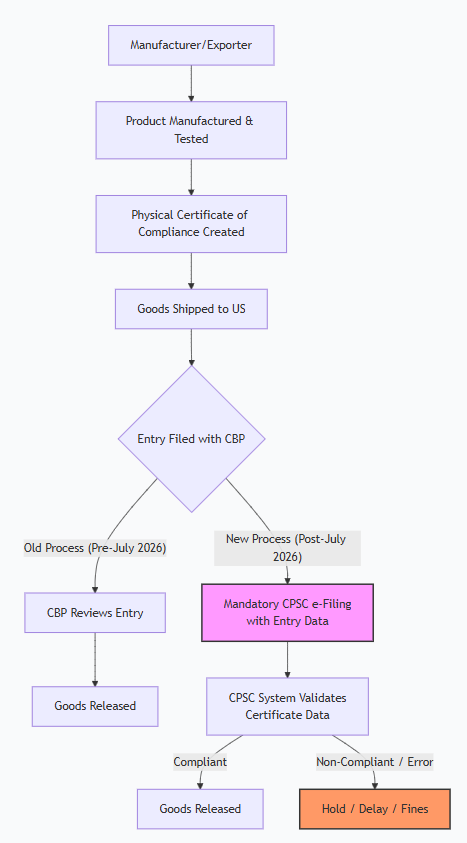
The most impactful regulation is the new mandate requiring importers to electronically file Certificates of Compliance through the CPSC's e-filing system for all regulated consumer products.
Scope: This applies to a wide range of home textile products, including clothing, children's sleepwear, rugs, carpets, and certain other home furnishings.
The Shift: Previously, importers were required to maintain physical compliance certificates. The new rule mandates that this same information be submitted electronically at the time of entry. This centralizes oversight in a way not previously required.
Operational and Financial Implications
The transition to mandatory e-filing carries several direct implications for the industry:
Risk of Supply Chain Disruption: Failure to comply or even minor errors in the electronic filing can result in significant consequences, including shipment delays at ports, denied entry of goods, or potential fines. Given the complexity of global supply chains, this adds a new layer of risk.
Increased Compliance Burden: While the CPSC states the system is designed to streamline compliance and reduce paperwork, the immediate effect is a heightened administrative burden. Importers must now ensure their data entry is perfectly aligned with product safety documentation to avoid disruptions.
Need for Early Preparation: Industry groups like the Home Furnishings Association are emphasizing that early registration for the e-filing portal is "not just recommended — it's essential". Proactive steps include registering for the portal, linking product information, and reviewing all existing compliance documentation.
Underlying Safety Standards Remain in Effect
It's crucial to note that the e-filing requirement is a procedural change, not a relaxation of the underlying safety rules.
Flammability Standards: Existing flammability standards for clothing textiles (16 CFR Part 1610), carpets and rugs (16 CFR Parts 1630 & 1631), and children's sleepwear (16 CFR Parts 1615 & 1616) remain fully in effect. The CPSC is actively seeking to renew the information collection requirements for these standards.
Upholstered Furniture: Regulations like 16 CFR Part 1640 for upholstered furniture flammability, based on California TB 117-2013, continue to apply.
Chemical Restrictions: While not a new CPSC federal rule, state-level bans on PFAS in textile furnishings (effective January 1, 2025, in some states) are a growing compliance consideration for manufacturers and importers.
Summary Table of Implications
Visual Representation
To help visualize the new compliance workflow, here is a simple diagram illustrating the transition from the old process to the new mandatory e-filing system.