 EN
EN

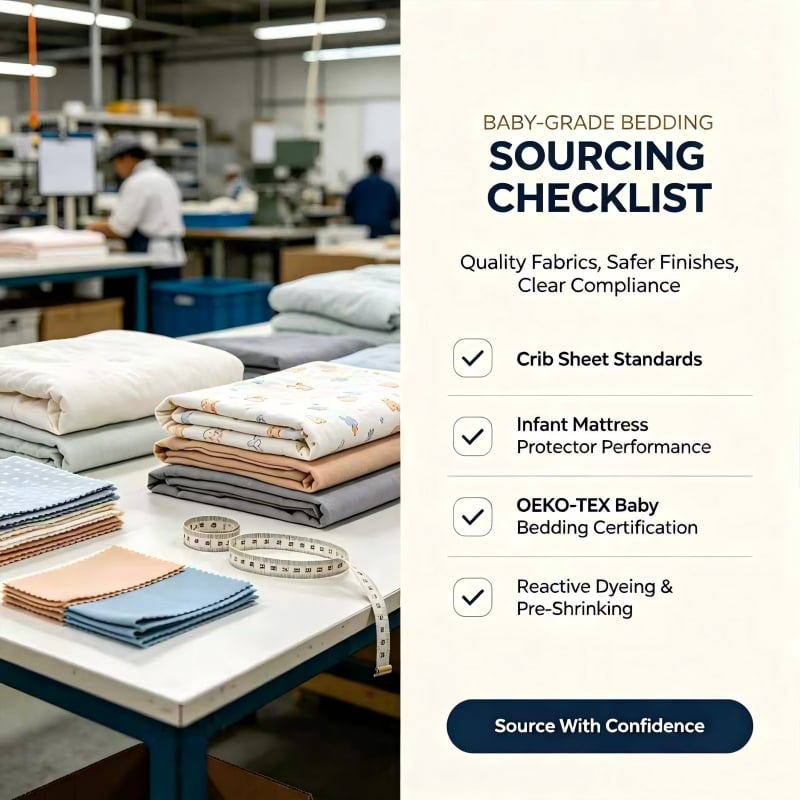
Many overseas buyers search for OEKO-TEX baby bedding, crib sheets or infant mattress protectors yet overlook critical safety benchmarks, fabric trade-offs and marketplace compliance risks. As a direct manufacturer specializing in infant home textiles, we share practical sourcing guidance to help you build competitive product lines, lower return rates and prevent costly listing suspensions.
1. Clarify Two Different “Baby-Grade” Product Segments First
Not all bedding labelled baby-safe follows identical safety criteria. Misaligned product positioning will trigger compliance alerts on Amazon and mainstream retail platforms.
- Infant bedding for 0–36 monthsThis category covers crib sheets, duvet covers, swaddles, infant mattress protectors and sleeping bag liners. It is governed by the strictest global safety standards. If you market goods toward newborns, your entire supply chain must meet high-level infant textile specifications.
- Toddler bedding for ages 3 and aboveNumerous suppliers market children’s bedding under the “baby-grade” label while only satisfying relaxed safety requirements. Our recommendation: clearly mark target age ranges on every listing to avoid consumer disputes and regulatory enquiries.
Factory insider note: Never trust verbal safety commitments from fabric suppliers. Always arrange finished sample testing before bulk production. Raw fabric, dyeing techniques and small accessories can alter final test results; only finished textile test reports are valid for sales of crib sheets, infant mattress protectors and other baby bedding.
2. Fabric Selection: Match Materials to Your Product Line & Price Tier
40s / 60s Combed Cotton Plain Weave — Year-round Core Staples
Pros: Breathable, consistent wash performance and balanced costs. Ideal for mainstream maternity retailers and mid-range cross-border lines.Heads-up: Higher-count cotton tends to be thinner and may show base colours when used for infant mattress protectors.Our recommendation: Select 60s combed cotton for crib sheets and duvet covers if budget permits. Always opt for reactive dyeing. Low-cost pigment printing rubs off easily after washing and generates recurring negative reviews.
Knitted Cotton Jersey — Bestselling Newborn Fabric
Stretchy, lightweight and buttery soft against sensitive skin. Widely adopted for swaddles, fitted crib sheets and sleeping bag liners.Common sourcing trap: Cheap knitted fabric made from carded cotton pills severely. For all baby textile items, we only utilise combed cotton. Keep fabric weight above 180g/㎡; lighter material lacks durability and attracts complaints about transparency.
Bamboo & Bamboo-Cotton Blends — Seasonal Summer Collection
Market selling point: cooling and breathable bedding for babies prone to overheating.Known limitations: Fabric softness fades after repeated washes, and the material stretches easily.Sourcing advice: Position these as limited seasonal SKUs rather than permanent core products. Sell them in bundles with pure cotton sets to minimise return rates.
TPU Waterproof Infant Mattress Protectors — High Repurchase Essential
We provide two mature fabric combinations to fit different market positioning:
- Premium line: Cotton knit surface + non-phthalate TPU film. Ultra skin-friendly, perfect for newborn ranges and high-end OEKO-TEX baby bedding collections.
- Value wholesale line: Poly-cotton woven + TPU film. Suited for bulk maternity distributors and family dormitory demand.
Non-negotiable rule: Avoid PVC waterproof liners entirely. PVC emits strong odours and fails international infant safety tests. We suggest ultrasonic lamination to reduce pinhole water leakage on infant mattress protectors.
3. Dyeing & Accessories: Hidden Details That Impact Safety & Reviews
- Only reactive dyeing for all baby bedding. Steer clear of transfer printing and cheap pigment printing.We maintain strict control over formaldehyde, harmful aromatic amines and pH levels. Infant skin is delicate, so finished fabric pH should stay within skin-friendly ranges.Our standard production workflow includes full washing and pre-shrinking after dyeing to remove loose dye and stabilise sizing, which significantly cuts shrinkage-related returns for crib sheets and baby bedding sets.
- Key accessory standards for infant textile safetyZippers: Nickel-free nylon zippers. Metal zippers oxidise and carry risks of scratching babies. Add fabric zipper stoppers for extra protection.Elastics: Premium latex thread elastic. Recycled rubber elastic often produces unpleasant odours and fails safety inspections.Thread management: Strict short-thread requirements. Major e-commerce platforms conduct regular safety audits; long loose threads are classified as choking hazards.
4. Global Certifications You Should Prioritize
- Oeko-Tex Standard 100 Class 1 (Baby): The most widely recognised certification for high-end baby bedding across Europe, North America and Oceania. Listing this credential builds strong trust with boutique buyers and end consumers searching for certified OEKO-TEX baby bedding.
- EU market: Comply with REACH regulations on restricted chemicals.
- US market: Follow CPSC juvenile textile safety requirements.
Critical reminder: Certification reports cannot be shared across different styles. Platform audits will remove listings if products do not match submitted test documents. We support custom single-item testing for brand partners developing crib sheets, infant mattress protectors and full baby bedding ranges.
5. Factory Sourcing, MOQ & Customisation Advice
Do not blindly chase rock-bottom pricing. Baby textiles fall under high-risk safety product categories. Cutting corners on raw materials leads to failed testing, poor customer feedback and irreversible harm to your brand reputation.
Custom options come with different minimum order requirements:
- Stock patterns & blank fabric production: Lower MOQ
- Exclusive custom digital prints: Higher MOQ, suitable for brands with stable ongoing orders for OEKO-TEX baby bedding, crib sheets and infant mattress protectors.
Ensure pre-shrinking treatment is included in your production specifications. Cotton naturally shrinks; size complaints after home washing remain one of the top causes of returns for fitted crib sheets.
Quick B2B Sourcing Checklist Before Confirming Bulk Orders
- Define target age group clearly: separate newborn infant lines from toddler bedding
- Select fabrics based on sales cycle: combed cotton / knitted jersey for permanent core SKUs; bamboo blends for summer promotions; add waterproof infant mattress protectors as matching essential items alongside crib sheets
- Complete sample safety testing before bulk production
- Lock fabric, accessory and finishing standards within purchase contracts to avoid bulk order deviations
Table of Contents
- 1. Clarify Two Different “Baby-Grade” Product Segments First
- 2. Fabric Selection: Match Materials to Your Product Line & Price Tier
- 3. Dyeing & Accessories: Hidden Details That Impact Safety & Reviews
- 4. Global Certifications You Should Prioritize
- 5. Factory Sourcing, MOQ & Customisation Advice
- Quick B2B Sourcing Checklist Before Confirming Bulk Orders