 EN
EN

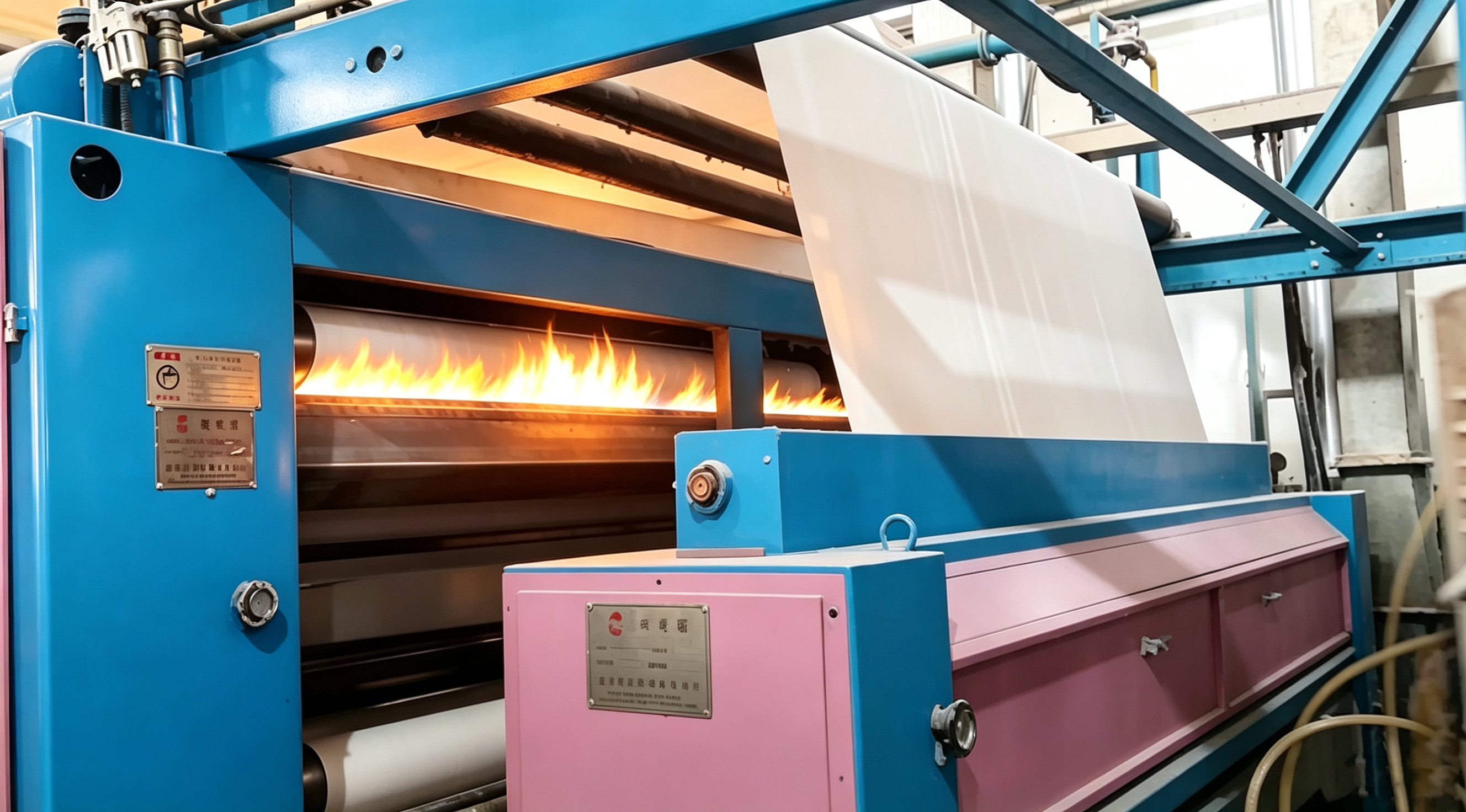
The equipment in the photo that is emitting flames and whose white fabric is continuously passing through the flames is a scouring machine in an dyeing factory. It is a core equipment for fabric pretreatment and is mostly used in home textile and garment fabric processing (the fabric of your bamboo fiber mattress protector will go through this process).
I. What is scouring? Principle
After the fabric weaving is completed, there will be a large amount of short fibers extending outward on the surface. It feels rough and is prone to balling. The printing and dyeing will also become blurry.
Process: The fabric passes through a combustible flame (or a high-temperature metal burn plate) at a fast speed. The contact time of the fabric with the flame is very short. Only the surface float fibers are burned off, and the fabric itself's yarns will not be burned out, making the fabric surface smooth and shiny.
II. Process Location (Complete Textile Chain)
Spinning → Weaving (obtaining the base fabric) → Brushing (the first dyeing and finishing process) → Desizing → Scouring → Bleaching → Dyeing / Printing → Post-treatment (waterproof, coolness, anti-mite, etc., the waterproof function of the mattress protector is completed in the post-treatment)
III. Two Mainstream Brushing Forms (The machine in your picture is a gas brushing machine, which is the most common in factories)
Gas brushing (the model in the picture)
Using natural gas / liquefied gas to form a linear flame, it can be burned on both sides, fast, applicable to most woven fabrics (cotton, bamboo fiber viscose, polyester cotton), home textile fabrics are the first choice.
⚠️ Key Process Points: Uniform fabric surface tension, stable weaving speed, flame temperature control; too slow weaving speed is likely to burn the fabric, too fast weaving speed makes the fibers not burn cleanly.
Copper plate brushing: The high-temperature red-hot copper plate contacts the fabric. This method is gradually being phased out and is suitable for thick cotton fabrics.
IV. Key Process Points Related to Your Mattress Cover Fabric
Difficulties in Brushing Bamboo Viscose (Viscose Bamboo) Fabric
Viscose fibers have lower heat resistance than pure cotton, the flame should not be too large, and the weaving speed should be faster. If the flame is too intense, the fabric strength will decrease and it is easy to have holes; this is also the reason why the brushing process in bamboo fabric factories requires experienced technicians to adjust the parameters.
Brushing Grades
The industry standard is divided into 1–4 grades. Home textile fabrics generally require grades above 3. The higher the grade, the smoother the fabric surface, and the subsequent waterproof coating, printing are less likely to have defects.
V. Common Industry Problems & Functions
✅ Benefits of Brushing:
① Flat fabric surface, high visual quality of the finished product;
② Reduces subsequent use of fabric balling and balling;
③ Dyeing and coating (waterproof coating) are more uniform, and stains will not be caused by the fibers.
❌ Process Risks:
Improper operation may result in burn holes, uneven fabric color, local thin yarns; fabrics containing synthetic fibers will melt and form hard lumps when the temperature is too high.
VI. Extended Knowledge (Home Textile Fabric Industry Chain)
Like the complete path of your bamboo fiber waterproof mattress protector:
Bamboo pulp → Viscose spinning → Weaving to form white base fabric → Brushing → Bleaching and shaping → Waterproof functional coating processing → Cutting and sewing into finished products.
Many low-priced mattress covers will skip the brushing process, which is cheaper, but the fabric surface is rough and is more likely to ball up over time.